
Garage Door Maintenance & Tune-Up Service in Colorado Springs — Prevent Breakdowns Before They Happen
Your garage door opened this morning without a problem. It will probably open tomorrow without a problem too. And the day after that. And the day after that — right up until the morning it doesn’t.
That’s how garage door breakdowns work. They don’t announce themselves in advance. The spring doesn’t send a warning two weeks before it snaps. The cable doesn’t tell you it’s fraying until it fails completely. The opener motor doesn’t slow down gradually over months — it works fine one day and burns out the next.
But here’s what most Colorado Springs homeowners don’t know — the signs of an impending breakdown are always there. Worn springs show visible fatigue before they snap.
Fraying cables show loose strands before they fail. Rollers show flat spots and cracked bearings before they seize. A trained technician who inspects your door regularly catches every one of these warning signs and addresses them before they turn into an emergency repair that traps your car inside the garage at the worst possible time.
That’s exactly what our garage door maintenance and tune-up service does. We inspect every component, service every moving part, and test every safety function on your door system — so you get ahead of the problems instead of waiting for them to find you.
Schedule your tune-up today and keep your garage door running quietly and reliably through everything Colorado Springs weather throws at it.
Why Regular Garage Door Maintenance Matters in Colorado Springs
Garage doors are the most frequently used mechanical system in most Colorado Springs homes. The average residential garage door opens and closes four to six times per day — which adds up to roughly 1,500 cycles per year. Over ten years, that’s 15,000 cycles of mechanical stress on every spring, every cable, every roller, and every hinge in the system.
Colorado Springs puts extra demands on garage door systems beyond the mechanical wear. The city sits at over 6,000 feet along the Front Range — which means temperature swings that regularly hit 30 to 40 degrees in a single day, intense UV exposure from the high-altitude sun, hail storms that damage panels and crack roller housings, and strong Front Range winds that stress every mounted component on the door system.
Metal contracts in Colorado’s cold winters and expands in the summer heat — putting repeated stress on springs, cables, and tracks that accelerates wear beyond what the same door would experience in a milder climate. Lubricant breaks down faster at altitude and in extreme temperature ranges. Hardware loosens from the constant vibration of operation combined with the thermal expansion and contraction cycle.
Regular maintenance keeps all of this under control. A properly serviced garage door handles Colorado’s climate demands better, lasts longer, and costs significantly less to own over its full service life than a door that only gets attention when something breaks.
We provide complete service of garage door repair Colorado Springs.
What’s Included in Our Garage Door Tune-Up Service
Our tune-up service covers every component of your garage door system from the bottom seal to the opener motor housing. We don’t do a quick visual check and a spray of lubricant — we go through every part methodically and address everything we find before we leave your property.
Full Spring & Cable Inspection
We inspect both springs — measuring the wire gauge, checking the coil count, looking for visible fatigue cracks, rust spots, and gaps that indicate a spring approaching the end of its cycle life.
We check the cable attachment points at the bottom bracket, trace both cables along their full run to the drum, and look for fraying, kinking, uneven tension, and wear at the drum groove where cables typically fail first.
If we find a spring or cable that’s showing significant wear, we tell you specifically what we found and give you an honest recommendation on whether it needs immediate replacement or can safely continue for another service period.
Track & Roller Check
We inspect both vertical track sections, both curved transitions, and both horizontal runs along the ceiling — checking for bends, kinks, gaps in the mounting hardware, and sections that shifted from their correct position.
We measure the spacing between the track and the door rollers on both sides to verify even clearance throughout the full travel path.
We inspect every roller on the door — checking for cracked housings, flat spots worn into the roller surface, and bearings that have seized or lost their smooth rotation.
Worn rollers are the most common source of garage door noise, and catching them during a tune-up prevents the track damage they cause when left to grind.
Hardware Tightening & Adjustment
Every bolt, bracket, lag screw, and mounting point on your garage door system loosens over time from the constant vibration of the door moving through thousands of cycles.
We go through every hardware connection on the door — hinge bolts, roller stem nuts, track mounting brackets, spring anchor brackets, cable drum set screws, and opener rail mounting hardware — and tighten every fastener to the correct specification.
Loose hardware is responsible for more rattling, wobbling, and track misalignment than most homeowners realize — and tightening it takes less than an hour but makes an immediate difference in how the door sounds and moves.
Lubrication of All Moving Parts
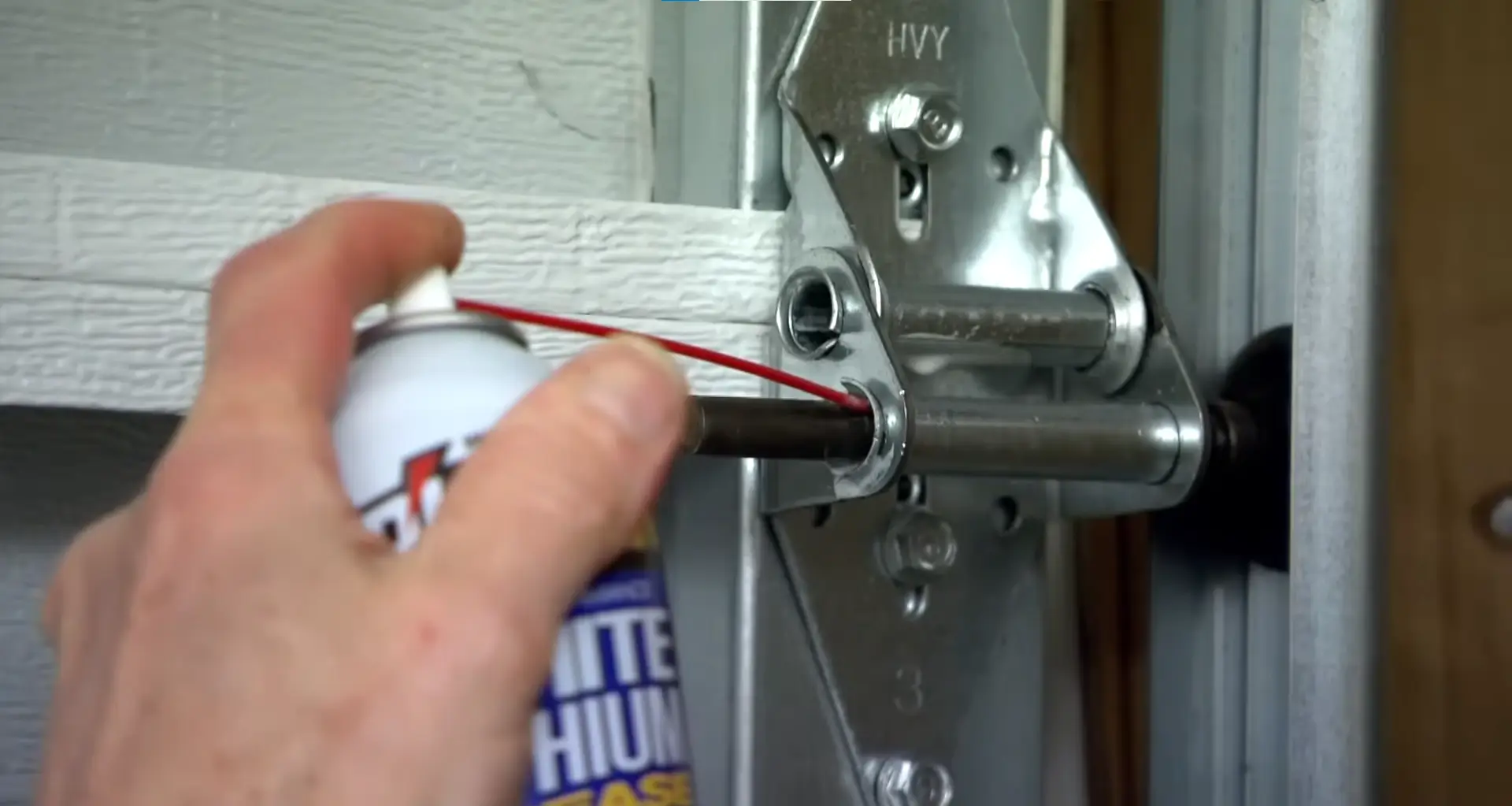
Proper lubrication is the single most impactful thing you can do to extend the life of your garage door components — and it’s the maintenance task most homeowners either skip entirely or do incorrectly with the wrong product. We use the right lubricant for each specific component — not a one-size-fits-all spray that collects dirt and breaks down quickly.
Springs: We apply a lithium-based grease to torsion springs that penetrates the coils, reduces metal-to-metal friction during operation, and slows the fatigue process that eventually causes springs to snap. Properly lubricated springs last measurably longer than dry springs under the same cycle load.
Rollers: We apply a light penetrating lubricant to the roller bearings that reaches the inner bearing race without building up on the roller surface or the track interior. Over-lubricated rollers collect dirt and debris that grinds against the track — we apply exactly the right amount to the right location.
Hinges: Every hinge pivot point gets a small application of lubricant at the pin and barrel to eliminate the squealing and grinding that dry hinges create as the door panels flex through the curved section of the track.
Opener Drive: We lubricate the chain, belt, or screw drive according to the manufacturer’s specific recommendation for that opener type. Chain drives need a specific chain lubricant. Screw drives need a white lithium grease applied to the threaded rod. Belt drives need no lubrication — but we check the belt condition and tension during this step.
Locks & Latches: We lubricate any locking mechanisms on the door to keep them operating smoothly and prevent them from seizing in Colorado’s cold winters when metal contracts and dry mechanisms bind.
Opener Force & Limit Adjustment
Your garage door opener uses two adjustable settings that control how it operates — the force setting and the limit setting.
The force setting controls how hard the opener pushes or pulls the door during operation. The limit setting controls where the door stops at the top of its travel and at the bottom.
These settings drift over time as the door system wears and the balance of the door changes. An opener running with incorrect force settings works harder than it needs to — straining the motor and shortening the opener’s service life.
An opener with incorrect limit settings either fails to fully close — leaving a gap at the bottom — or over-travels at the top and strains the system against the travel stop.
We test the current force and limit settings, observe how the door moves through a full open and close cycle, and adjust both settings to the correct values for your specific door weight and travel distance.
A properly adjusted opener runs efficiently, prolongs the motor’s service life, and operates the door correctly through its full travel path.
Safety Sensor Test & Alignment
We inspect both safety sensors — checking the indicator lights, cleaning the lenses, verifying the beam alignment, and testing the wire connections at both the sensor and the opener terminal.
We run the full safety reversal test — placing a solid object on the garage floor in the sensor path and confirming the door stops and reverses immediately on contact.
We also test the mechanical auto-reverse by placing a 2×4 flat on the floor under the door and running the close cycle — the door must reverse when it contacts the board without relying on the sensor beam at all.
These two safety tests together verify that your door’s safety system works correctly through both its electronic and mechanical protection mechanisms — giving you confidence that your door protects your family and your vehicles the way it was designed to.
Balance & Alignment Check
A properly balanced garage door stays in place when you stop it at the halfway point of its travel with the opener disconnected. It doesn’t drift up or drop down — it holds its position because the spring tension perfectly counterbalances the door’s weight.
A door that drifts up has too much spring tension. A door that drops has too little. Either condition makes the opener work harder than it should and puts uneven stress on the cables and tracks.
We disconnect the opener and test the balance at the midpoint of travel during every tune-up. If the door drifts more than a few inches in either direction, we adjust the spring tension until the door holds its position correctly.
A balanced door runs easier on the opener, extends the life of the springs and cables, and moves more smoothly and quietly through its full travel path.
Weather Seal Inspection
Your garage door has weather seals along three sides — the bottom seal that contacts the floor when the door closes, and the side and top seals that fill the gap between the door frame and the door itself. These seals keep cold Colorado air, moisture, pests, dust, and road debris out of your garage.
We inspect the bottom seal for cracks, tears, compression loss, and sections that no longer contact the floor evenly.
We check the side and top weather stripping for tears, gaps, and sections that have pulled away from the frame.
We also check the threshold seal on the garage floor — the rubber strip that the bottom seal contacts when the door closes — for deterioration that creates gaps even when the bottom seal is in good condition.
Worn weather seals are a common source of cold drafts, moisture entry, and pest problems in Colorado Springs garages — and replacing them during a tune-up costs significantly less than dealing with water damage or a pest infestation later.
How Colorado’s Climate Affects Your Garage Door
Colorado Springs puts specific seasonal demands on garage door systems that homeowners in milder climates don’t deal with. Understanding how each season affects your door helps you time your maintenance visits for maximum impact.
Winter — Cold Temperatures & Ice
Colorado winters are the hardest season on garage door systems across Colorado Springs. Metal springs contract in cold temperatures and become more brittle — which is why the majority of spring failures across Colorado Springs happen between November and March.
Lubricant thickens in freezing temperatures and stops protecting moving parts the way it does in warmer weather.
The bottom seal can freeze to the garage floor overnight and tear when the door tries to open in the morning. Ice forming in the track can prevent the rollers from moving freely and force the opener motor to strain against the blockage.
A fall tune-up — scheduled before temperatures drop hard — prepares your door system for winter.
Fresh lubricant that performs in cold temperatures, properly tensioned springs that handle the metal contraction, and a bottom seal in good condition all reduce the risk of a winter breakdown significantly.
Summer — Heat & UV Exposure
Colorado Springs summers deliver intense UV exposure from the high-altitude sun that bleaches and weakens panel surfaces, degrades weather seal rubber, and breaks down lubricant faster than it would in a lower-altitude climate.
Heat expands metal tracks and springs — which can cause tracks that were properly aligned in winter to develop binding points in summer as they expand.
Lubricant that performs well in winter can thin out and drip off components in summer heat — leaving parts dry and unprotected during the hottest months.
A spring tune-up prepares your door for summer — with fresh lubricant suited to the temperature range, weather seals in good condition to handle the UV exposure, and hardware tightened after the winter expansion and contraction cycle loosened it.
Spring & Fall — Wind & Temperature Swings
Colorado Springs spring and fall seasons bring the strongest winds and the most dramatic daily temperature swings of any time of year.
Sensors get knocked out of alignment by wind. Hardware loosens from the repeated thermal cycling of warm days and cold nights.
Panels take damage from debris carried by strong Front Range gusts. These transition seasons are the ideal time to schedule a full tune-up — catching any damage from the previous season and preparing the system for the demands of the next one.
How Often Should You Service Your Garage Door in Colorado Springs?
Standard Residential — Once a Year
Most Colorado Springs homes with a standard single or double car garage benefit from one full tune-up per year.
The ideal timing is fall — before Colorado’s winter temperatures hit hard and put maximum stress on springs and cables.
A single annual tune-up catches the wear accumulated over the previous year, prepares the system for the demands of winter, and keeps the door running reliably through the full cycle of Colorado’s seasons.
Heavy Use or Older Door — Twice a Year
If your garage door opens and closes more than six to eight times per day — as it might in a busy household with multiple drivers, a home-based business with frequent deliveries, or a property used as a rental — twice-yearly maintenance keeps the higher wear rate under control.
Doors more than ten years old also benefit from twice-yearly service because their components have more accumulated wear and less remaining service life — making early detection of failing parts more important.
Commercial Properties — Quarterly
Commercial garage doors on warehouses, distribution centers, storage facilities, and auto shops in Colorado Springs complete far more cycles per year than any residential door.
A busy commercial door might complete 30 to 50 cycles per day — which adds up to 10,000 to 18,000 cycles per year.
At that rate, components wear faster, lubricant breaks down sooner, and hardware loosens more quickly.
Quarterly maintenance visits keep commercial door systems running reliably through every shift and prevent the kind of sudden failures that shut down operations and cost real money in downtime.
Our Maintenance & Tune-Up Process
We handle every tune-up visit with the same thoroughness regardless of the door’s age, brand, or condition. Here’s exactly what happens during a professional garage door tune-up in Colorado Springs.
Full System Inspection
We start by running the door through several complete open and close cycles while we observe the full system in motion — listening for unusual sounds, watching for uneven movement, and noting any visible wear or damage before we touch anything. This observation step tells us what the system is doing under normal operating conditions and guides where we focus the detailed inspection that follows.
Lubrication & Adjustment
We apply the correct lubricant to every moving part — springs, rollers, hinges, opener drive — and adjust the opener force settings, limit settings, and spring tension as needed to bring the system back to the correct operating specifications. This step alone makes an immediate, noticeable difference in how quietly and smoothly the door operates after the tune-up.
Safety Test & Balance Check
We run the full safety reversal test using both the sensor beam and the mechanical contact method. We disconnect the opener and test the door’s balance at the midpoint of travel. We confirm every safety device works correctly and the door holds its balance within the acceptable range before we proceed.
Written Report & Recommendations
We give you a written report after every tune-up visit covering every component we inspected, every adjustment we made, every part we lubricated, and every safety test we ran. We flag any components that showed significant wear during the inspection and give you a clear recommendation — with specific reasoning — on whether those components need immediate attention or can safely continue until the next service visit. You leave the tune-up with a complete picture of your door system’s current condition and a clear plan for keeping it in good shape going forward.
The Real Cost of Skipping Garage Door Maintenance
Most Colorado Springs homeowners skip garage door maintenance because the door works fine and the maintenance feels unnecessary. Here’s what that decision actually costs over time.
A garage door spring replacement costs significantly more than an annual tune-up. A cable replacement costs more. An opener motor replacement costs more.
An emergency call at midnight — with the additional urgency and disruption that comes with it — costs more than any of these individual repairs.
And the cascading damage that happens when one failing part stresses every other part in the system — a broken spring that over-loads the cable, a frayed cable that throws the door off track, an off-track door that bends the tracks and damages the opener — can turn a single maintenance-preventable failure into a full system repair that costs many times more than years of regular tune-ups would have.
The math is straightforward. Regular maintenance costs less than irregular repairs. Every time. The only question is whether you learn that through a tune-up bill or an emergency repair bill at 2am on a Monday.
Why Colorado Springs Homeowners Trust Us for Maintenance & Tune-Ups
Thorough & Detailed Service
We cover every component of your door system on every tune-up visit — not a quick visual check and a spray of lubricant.
Our technicians work through a complete inspection checklist and document every finding so you know exactly what condition your door system is in after every visit.
All Door Types & Brands Covered
We service garage doors from every major manufacturer — Clopay, Amarr, Wayne Dalton, CHI, LiftMaster, Chamberlain, Genie, and more — across all door types including steel, wood, aluminum, and fiberglass residential doors and commercial overhead and rolling steel door systems.
Licensed & Insured Technicians
Every technician we send to your home carries full licensing and insurance. Tune-up work involves adjusting spring tension, working around cables under load, and servicing electrical opener components — all of which require proper training and credentials to handle safely.
Upfront Pricing Before We Start
We give you a written quote before the tune-up begins — covering the full service and any parts that need replacement based on the initial inspection.
The price on the quote is the price you pay. No additions, no surprise charges, no pressure to approve work you’re not ready for.
Written Report After Every Visit
Every tune-up ends with a detailed written report covering what we inspected, what we found, what we adjusted, and what we recommend for the next service period.
You have a complete service record for your garage door system — useful for insurance purposes, for future technicians who service the door, and for tracking the system’s condition over time.
Frequently Asked Questions About Garage Door Maintenance in Colorado Springs
Schedule Your Garage Door Tune-Up in Colorado Springs Today
A garage door tune-up is the simplest, most cost-effective thing you can do to protect your door system, prevent unexpected breakdowns, and keep your home running smoothly through every season Colorado Springs delivers.
Call us today and schedule your tune-up. We visit your home, inspect every component of your door system, service every moving part, and leave you with a written report and a door that runs quieter, smoother, and more reliably than it did before we arrived.