
Garage Door Repair in Chapel Hills, Colorado Springs — Trusted Local Service for an Established North Side Neighborhood
Chapel Hills has been one of the most recognized neighborhoods on the north side of Colorado Springs for decades. The streets are mature. The trees are established. The homes have character that newer subdivisions simply haven’t had enough time to develop yet.
But established neighborhoods come with established problems — and one of the most common ones in Chapel Hills right now is a garage door system that has quietly aged past its best years without the homeowner realizing it.
We serve Chapel Hills homeowners regularly and we understand what this neighborhood deals with — aging springs, outdated openers, worn cables, and doors that have been repaired a few times already and are approaching the point where the next decision is bigger than a simple fix. We give you honest answers and handle whatever the door actually needs. Call us now and we fix it today.
What Chapel Hills Homeowners Need to Know About Their Garage Doors
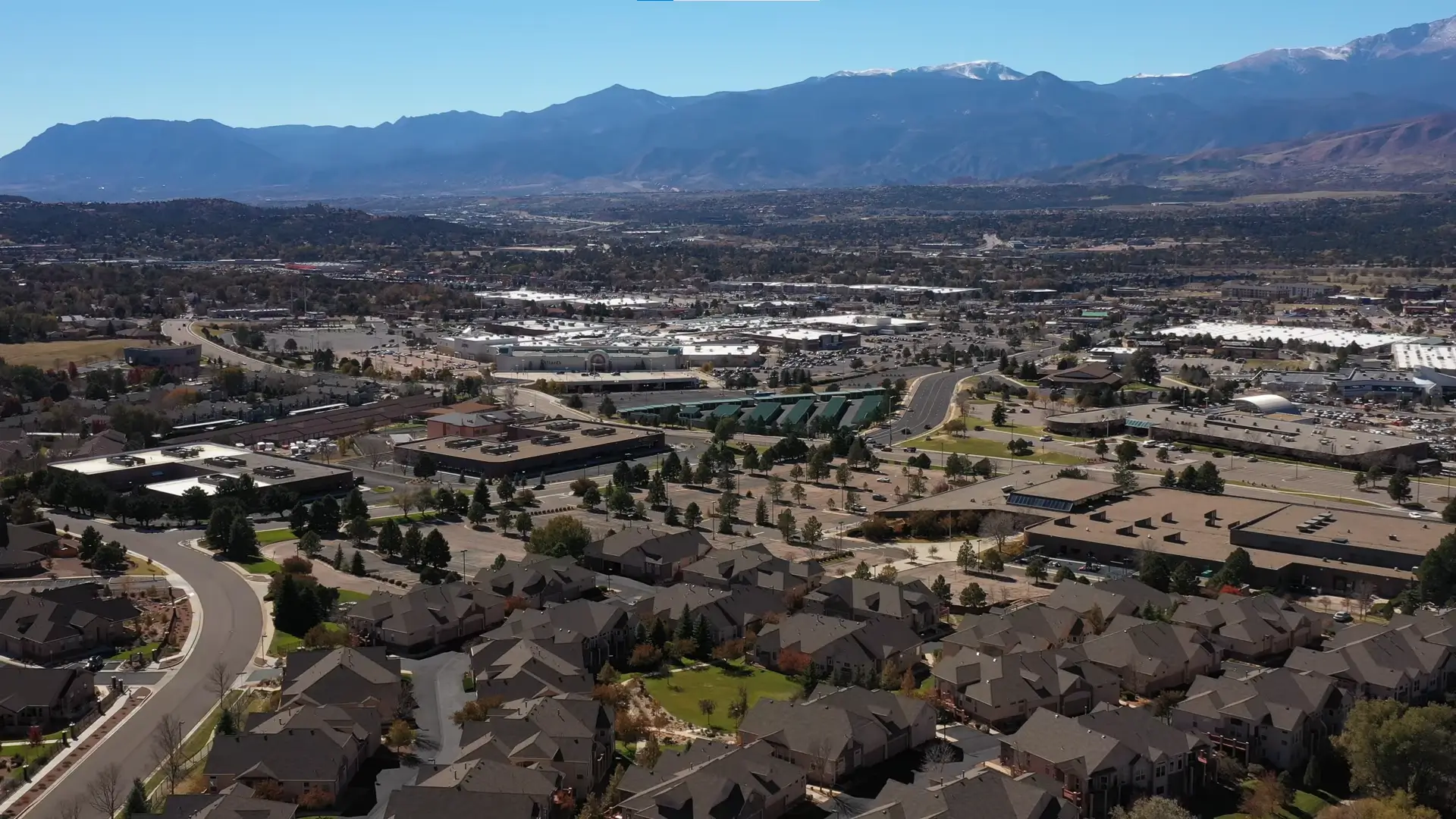
Chapel Hills sits on the north side of Colorado Springs, bordered by the Chapel Hills Mall corridor to the south and stretching north toward Briargate.
The neighborhood developed primarily between the late 1970s and the early 2000s — which puts most Chapel Hills homes in a construction era that created very specific garage door aging patterns.
Homes built in the 1980s and early 1990s are now 30 to 40 years old.
The garage door systems on these properties have either been replaced once already or are running original components that have far exceeded their rated service life.
Either way, they need more frequent attention than newer systems and carry a higher risk of sudden failure.
Homes built in the mid to late 1990s are approaching 25 to 30 years old — right in the window where original springs are on their second or third replacement cycle, openers are reaching end of life, and panels are showing the cumulative effects of decades of Colorado UV exposure, temperature swings, and hail events.
Even the newest Chapel Hills homes — built in the early 2000s — are now over 20 years old and entering the age range where full system replacement starts making more financial sense than continued individual repairs.
We help Chapel Hills homeowners understand exactly where their door system sits in its lifecycle and what that means for the decision ahead — whether it’s a targeted repair, a component upgrade, or a full replacement that resets the system for the next 20 years.
Most Common Garage Door Issues in Chapel Hills
Chapel Hills garage door problems reflect the neighborhood’s age range and construction era. Here are the issues we fix most frequently across Chapel Hills homes.
Aging Spring Systems on 1980s-2000s Chapel Hills Homes
Springs are the component that Chapel Hills homeowners deal with most frequently — because the springs on most homes in this neighborhood have already completed multiple replacement cycles and the newest set installed is often approaching its own end of life.
A standard-cycle torsion spring rated for 10,000 cycles lasts approximately seven to ten years on a home with average daily use.
A Chapel Hills home built in 1985 has gone through three or four sets of springs by now — and each set that gets installed is another standard-cycle spring working through the same cycle rating under the same Colorado weather conditions.
We recommend high-cycle springs for Chapel Hills homes at this stage — rated for 25,000 to 50,000 cycles instead of the standard 10,000.
High-cycle springs cost more upfront but last significantly longer and reduce the frequency of spring replacement calls over the remaining life of the home.
For a Chapel Hills homeowner who has already replaced springs twice or three times, high-cycle springs change the pattern completely.
We carry high-cycle springs in all the standard sizes for Chapel Hills door configurations on our trucks and install them the same day you call.
Outdated Opener Technology Without Modern Safety Features
Many Chapel Hills homes still run opener systems that were installed in the late 1980s, 1990s, or early 2000s.
These openers have been reliable workhorses — but they lack features that have become standard on modern systems and that affect both convenience and safety.
No rolling code technology: Older openers use a fixed frequency remote code that doesn’t change between uses. Modern code grabbing devices can capture and replay that fixed code to open your garage door without your knowledge. Rolling code technology — standard on all openers made after the mid-1990s — changes the access code with every use, making code theft essentially impossible.
No auto-reverse function: Openers installed before 1993 may not have the federally mandated auto-reverse mechanism that stops and reverses the door when it contacts an obstacle. A door that closes without auto-reverse is a serious safety risk for children, pets, and vehicles in the garage opening.
No battery backup: Modern openers include battery backup systems that keep the door operational during power outages — common during Colorado Springs winter storms. Older systems leave you manually operating the door every time the power goes out.
No smart connectivity: Older openers cannot connect to your home network or be controlled through a phone app. For Chapel Hills homeowners who want app-based access, real-time alerts, and smart home integration — upgrading the opener is the only path.
We replace outdated openers with modern units that include all current safety features, rolling code technology, battery backup, and optional smart Wi-Fi connectivity. We handle the full swap and program all remotes, keypads, and phone apps during a single visit.
Cable Wear on High-Mileage Residential Door Systems
Cables on Chapel Hills homes have accumulated more cycles than cables in almost any other neighborhood we serve — simply because the homes are older and the doors have been running longer.
A cable that has completed 30,000 or 40,000 cycles over the life of a 30-year-old home carries more fatigue than the same cable with 5,000 cycles on a newer home.
Fatigue in garage door cables shows up as internal wire strand breaks that are not always visible from the outside.
The outer strands look fine while the inner strands have been breaking one by one over years of operation.
The cable feels tight and looks intact right up until the moment the remaining strands can no longer hold the load — and then it snaps without warning.
We inspect cables carefully on Chapel Hills homes during every service visit. We look for external fraying, kinking, uneven tension, wear at the drum groove, and any visible strand separation.
When we find a cable approaching the end of its safe service life, we recommend replacement before it fails — because a cable that snaps under load drops the door suddenly and can cause serious damage to whatever sits underneath it at that moment.
Panel Deterioration From Years of Colorado UV Exposure
Chapel Hills homes have been facing Colorado’s high-altitude sun for decades. The UV exposure at Colorado Springs’ elevation is significantly more intense than at lower altitudes — and it shows on panels that have been absorbing that radiation for 20 to 40 years.
Steel panels on older Chapel Hills homes often show surface oxidation where the paint coating has broken down and moisture has reached the steel underneath.
Painted surfaces fade, chalk, and peel. Panel edges rust where the cut steel is exposed. Bottom panels take the most damage because they absorb ground-level moisture during winter and maximum sun during summer.
Panel deterioration affects more than appearance. Rusted or oxidized panels lose structural integrity over time.
They become weaker at the stress points where hinges attach and where the panel edges meet. A deteriorated bottom panel that looks merely cosmetic can develop cracks under load during cold Colorado winters when the steel becomes more brittle.
We assess panel condition carefully on older Chapel Hills homes and give you an honest recommendation — whether individual panel replacement restores the door’s function and appearance or whether the deterioration has spread far enough that full door replacement makes more financial sense.
Weather Seal Failure on Older Door Frames
Weather seals on Chapel Hills homes have been compressing and releasing against concrete garage floors for 20 to 40 years.
The original rubber seals installed during construction are long gone on most homes in this neighborhood — replaced once, twice, or three times since then.
But it’s not just the bottom seal that causes problems on older Chapel Hills homes. The door frame itself ages.
The wood framing around the opening absorbs moisture, swells, shrinks, and shifts over decades of Colorado weather.
That movement changes the gap between the door and the frame — creating spots where even a new weather seal can’t fully close because the frame is no longer straight.
We inspect both the seal condition and the frame condition during every Chapel Hills service call. If the seal needs replacement, we install new material that seals properly under the current frame geometry.
If the frame has shifted enough to create gaps that a seal cannot close, we identify the specific problem points and recommend the most effective solution for your specific door and frame situation.
When Repair Makes Sense vs Replacement for Chapel Hills Homes
This is the most important conversation we have with Chapel Hills homeowners — and we have it honestly every time.
Chapel Hills sits in an interesting position. Many homes here are old enough that continued individual repairs start to cost more over time than a full replacement would — but the homes themselves are well-built and the owners plan to stay for years.
That makes the repair vs replace decision more nuanced than it is for a newer home with plenty of remaining system life.
Here is how we think through it with Chapel Hills homeowners:
Repair makes sense if:
The door structure, frame, and tracks are still sound. Only one or two specific components need attention.
The total repair cost stays comfortably below the price of a new door system. The homeowner plans to sell within the next few years and doesn’t want to invest in a full replacement that won’t affect the sale price significantly.
Replacement makes more sense if:
Multiple components are failing in quick succession. The panels show widespread deterioration beyond what individual replacement can address.
The opener lacks modern safety features and the spring system is also due for replacement — at that point, replacing all three individually costs nearly as much as a full system replacement.
The homeowner plans to stay in the home for ten or more years and wants a fresh system with a full warranty and no near-term repair expectations.
We walk through this analysis with every Chapel Hills homeowner who calls us about a door that’s been showing its age.
We compare the honest cost of repair against the cost of replacement — including future repair likelihood — and give you a clear recommendation based on your specific situation. You make the final call with full information and no pressure.
Upgrading Chapel Hills Homes With Modern Garage Door Technology
One of the most common conversations we have in Chapel Hills involves homeowners who don’t necessarily need a full door replacement but do want to upgrade specific parts of their system to take advantage of modern technology.
These targeted upgrades deliver real improvements without the cost of a full replacement:
Smart Opener Upgrade: Replace an aging chain drive opener with a modern belt drive or direct drive smart opener. The new unit runs significantly quieter — which matters in an attached Chapel Hills garage where the motor noise travels into bedrooms and living areas. It also adds app-based control, real-time alerts, and optional smart home integration that older units simply cannot support. We handle the full swap and program everything during a single visit.
High-Cycle Spring Upgrade: Replace standard-cycle springs with high-cycle springs rated for 25,000 to 50,000 cycles. For a Chapel Hills homeowner who has already replaced springs multiple times, high-cycle springs change the maintenance pattern and eliminate the repeated spring failure calls that standard springs create on older, well-used doors.
Battery Backup Addition: Add a battery backup module to your existing opener or include it in a new opener installation. During Colorado Springs winter storms when power outages strand you in or out of your garage, battery backup keeps the door operating normally.
Weather Seal Replacement Package: Replace the bottom seal, both side seals, and the top seal in a single visit — restoring the full weather barrier around the door that decades of Colorado weather has degraded on most older Chapel Hills homes.
These upgrades happen during a single visit in most cases. You get meaningfully better performance without the full investment of a complete door replacement.
All Garage Door Services We Provide in Chapel Hills
We bring every service we offer across Colorado Springs directly to Chapel Hills homeowners — same quality, same speed, same upfront pricing:
- Spring Repair & Replacement →
- Cable Repair & Replacement →
- Overhead Garage Door Repair →
- Opener Repair & Installation →
- Panel Replacement →
- Track Repair & Realignment →
- Sensor Repair →
- Garage Door Installation →
- Keypads, Remotes & Accessories →
- Maintenance & Tune-Up →
If you need complete garage door service in Colorado Springs, we handle aging systems, targeted upgrades, and full replacements on established Chapel Hills homes.
Frequently Asked Questions From Chapel Hills Homeowners
Call Us for Same-Day Garage Door Repair in Chapel Hills Today
Chapel Hills homeowners deserve a garage door company that understands established neighborhoods, aging systems, and the honest conversation about when to repair and when to replace. We bring that understanding to every Chapel Hills service call — along with the parts, the experience, and the straightforward approach that makes the repair process as simple as possible. To check complete services we offer visit garage door repair Colorado Springs.
Whether you need a spring replaced this morning, an opener upgraded this week, or an honest assessment of a door that’s been showing its age for a while — we handle it with the speed, knowledge, and integrity that Chapel Hills homeowners expect.
Call us now and schedule same-day garage door repair in Chapel Hills.